
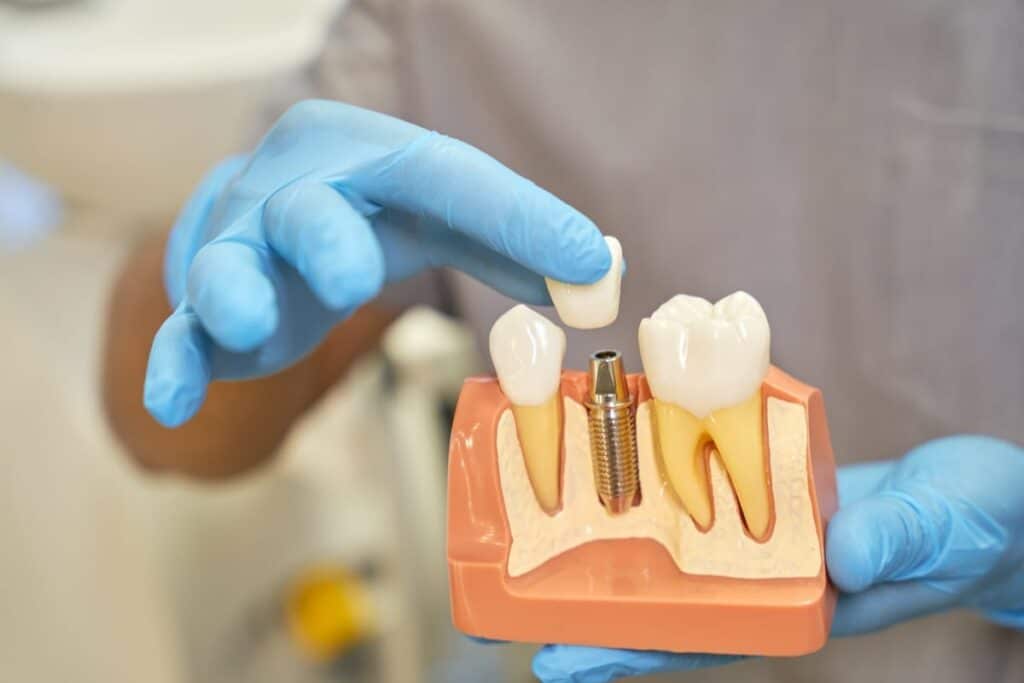
If you’ve been wondering, “Am I actually a good candidate for dental implants in Manvel?” — you’re not alone. Many patients come to Manvel Dental & Implant Center with that exact question. Dental implants are a life-changing solution for missing teeth. But they aren’t the right fit for every patient in every situation.
The good news is that most healthy adults can qualify. Understanding what factors matter most helps you have a smarter conversation with Dr. Samuel Collins. Let’s walk through the key candidacy criteria honestly and clearly.
What Makes Someone a Good Candidate for Dental Implants in Manvel?
Dental implants require your jawbone to support a titanium post. That means your overall oral and physical health plays a big role. Dr. Collins evaluates several factors before recommending implants as your best path forward.
Here are the most important qualities of a strong implant candidate:
- Sufficient jawbone density to anchor the implant post
- Healthy gum tissue with no active periodontal disease
- Good general health without conditions that impair healing
- Non-smoker status or willingness to quit during treatment
- Realistic expectations and commitment to aftercare
Meeting these criteria doesn’t have to be perfect from day one. Some patients need preparatory treatments first. The goal is to get you to a place where implants can succeed long-term.
Does Age Matter When Considering Dental Implants?
Age is a common concern for patients exploring implants. The short answer is — it depends on which direction you’re asking about. Younger patients and older adults face different considerations.
Teenagers and young adults typically need to wait. Implants are not placed until the jaw has fully developed. This usually happens in the late teens for most patients.
For older adults, age alone is rarely a disqualifier. Patients in their 60s, 70s, and even 80s receive dental implants successfully every year. What matters more is bone health and overall medical status — not the number on your birthday cake.
If you’re a senior patient in Manvel wondering about your options, Dr. Collins can assess your specific situation. Many older patients are excellent candidates and enjoy decades of benefit from their implants.
How Bone Density and Gum Health Affect Your Candidacy
Bone density is arguably the most critical physical factor for implant success. The implant post must fuse with your jawbone through a process called osseointegration. Without enough bone, that fusion cannot happen properly.
Bone loss often occurs after a tooth is missing for a long time. The jaw naturally shrinks when it no longer has a tooth root to support. This is why acting sooner rather than later often works in your favor.
If you’ve experienced bone loss, you may still qualify for implants. Bone grafting is a preparatory procedure that rebuilds the jawbone. Many patients undergo grafting before implant placement with excellent results.
Gum disease is another key factor. Active periodontitis must be treated before any implant procedure begins. Healthy gums provide the foundation that helps implants integrate and stay stable over time.
- Mild bone loss: May qualify with grafting support
- Active gum disease: Must be treated and resolved first
- Healthy bone and gums: Typically an ideal candidate
- History of gum disease: Can still qualify after successful treatment
Health Conditions and Lifestyle Factors That Affect Implant Success
Certain medical conditions can impact how well your body heals after implant surgery. Dr. Collins takes a whole-body approach when evaluating candidacy. Honesty about your health history helps him protect your long-term results.
Conditions that may require extra evaluation include:
- Uncontrolled diabetes — affects healing and increases infection risk
- Autoimmune disorders — may interfere with osseointegration
- Osteoporosis — affects bone density and stability
- Blood clotting disorders — may complicate surgical recovery
- Active cancer treatment — typically requires a waiting period
Having one of these conditions doesn’t automatically disqualify you. Many patients with managed health conditions still receive implants safely. The key word is managed — well-controlled conditions present far less risk than uncontrolled ones.
Smoking is one of the most significant lifestyle factors affecting implant success. Tobacco use reduces blood flow and slows healing dramatically. Studies show smokers face significantly higher implant failure rates than non-smokers.
If you smoke, Dr. Collins will talk with you honestly about the risks involved. Quitting — even temporarily during the healing period — can improve your outcomes considerably. Some patients use the implant process as motivation to stop smoking for good.
What Happens If You’re Not a Candidate Right Now?
Not being an ideal candidate today doesn’t mean implants are off the table forever. Many disqualifying factors are temporary or treatable. Dr. Collins works with patients to build a path toward candidacy when possible.
If you experience a Dental Emergency that results in tooth loss, acting quickly can help preserve bone and improve your implant options later. Prompt care often makes a meaningful difference in long-term outcomes.
Some patients choose dentures as a starting point while they prepare for implants. Others explore implant-supported options through our Dental Lab, which provides custom restorations tailored to your needs. There is rarely just one path forward.
Dr. Collins believes every patient deserves a clear explanation of their options. If implants aren’t right for you today, he’ll explain exactly why — and what steps could change that answer.
Your Next Step at Manvel Dental & Implant Center
Candidacy questions are best answered with a real evaluation — not just a checklist. Every patient in Manvel brings a unique combination of health history, bone structure, and lifestyle factors. Dr. Samuel Collins reviews all of these together to give you an accurate, personalized answer.
You don’t need to figure this out on your own. The team at Manvel Dental & Implant Center is here to guide you with honesty and expertise. We want you to feel confident in whatever decision you make about your smile. Book Now to schedule your appointment with our team.
Frequently Asked Questions
Can I get dental implants if I have diabetes?
Yes, many patients with diabetes receive dental implants successfully. The key factor is how well your diabetes is managed. Uncontrolled blood sugar levels increase infection risk and slow healing. Dr. Collins will coordinate with your physician if needed before recommending treatment.
How do I know if I have enough bone for dental implants?
Dr. Collins uses digital X-rays and 3D imaging to evaluate your jawbone density and volume. This is done during your candidacy consultation. If bone loss is present, bone grafting may be recommended to rebuild the necessary foundation before implant placement.
Does smoking completely disqualify me from getting dental implants?
Smoking significantly increases the risk of implant failure, but it does not automatically disqualify you. Dr. Collins will discuss your smoking history honestly and explain the elevated risks involved. Quitting before and during the healing process greatly improves your chances of long-term implant success.
What is the minimum age for dental implants?
Most dental professionals recommend waiting until jaw development is complete. This typically occurs in the late teen years, around 17 to 18 for many patients. Younger patients may be advised to use a temporary restoration until they are skeletally mature enough for implant placement.
How long does the dental implant process take from start to finish?
The timeline varies depending on each patient’s needs. If bone grafting is required, the process can take 12 months or longer. Patients with sufficient bone who are ready for placement may complete treatment in three to six months. Dr. Collins will give you a personalized timeline during your consultation.