
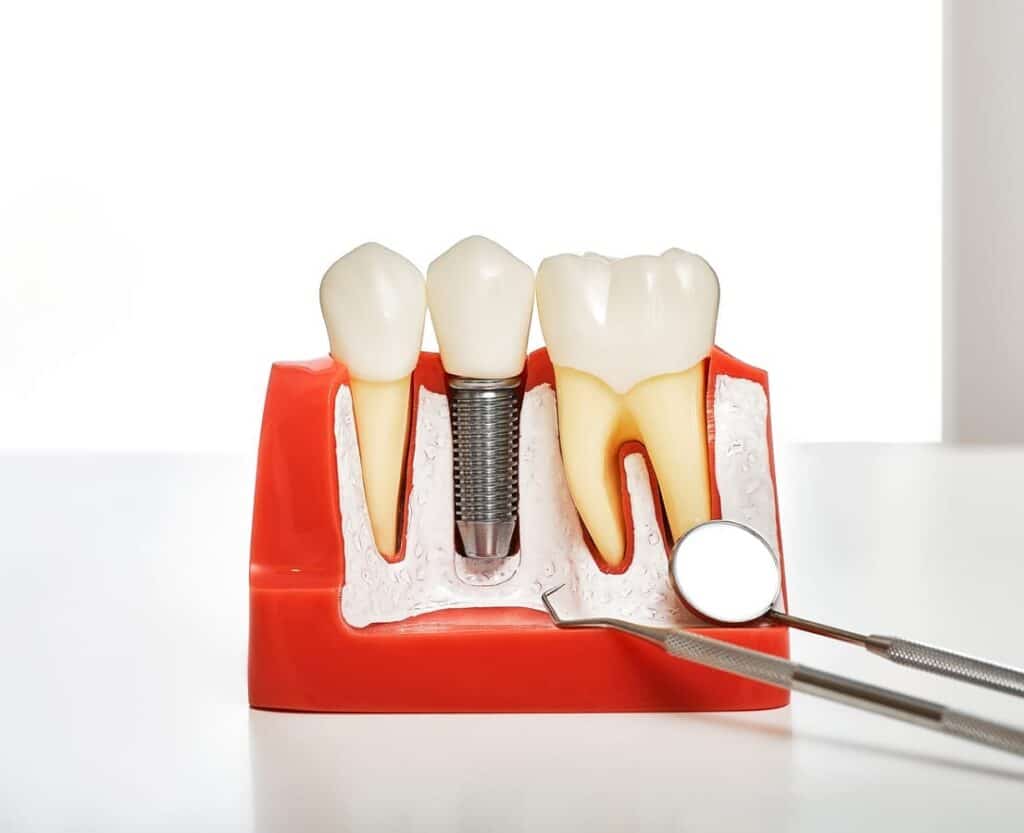
Losing a tooth changes more than your smile. It affects how you eat, speak, and feel about yourself every day. If you’re exploring your options in Manvel, TX, you’ve likely come across three main solutions: dental implants, dentures, and bridges. Understanding dental implants vs. dentures vs. bridges — and which one fits your life in Manvel — can feel overwhelming. This guide breaks it down clearly so you can make a confident, informed decision.
Understanding Your Three Main Tooth Replacement Options
Each tooth replacement option works differently. They also suit different patients depending on health, lifestyle, and budget. Knowing the basics helps you ask the right questions at your next appointment.
Dental implants are titanium posts surgically placed into your jawbone. They act as artificial tooth roots. A crown is then attached on top, creating a result that looks and functions like a natural tooth.
Dentures are removable appliances that replace multiple missing teeth. They can be full (replacing all teeth) or partial (filling gaps between existing teeth). They rest on your gums and are taken out for cleaning.
Dental bridges are fixed restorations that span a gap left by one or more missing teeth. They anchor to the teeth on either side of the gap. Unlike dentures, you cannot remove a bridge at home.
Dental Implants vs. Dentures vs. Bridges: Comparing the Key Differences in Manvel
When weighing dental implants vs. dentures vs. bridges, it helps to look at four major factors: durability, maintenance, bone health, and daily comfort. Each option scores differently in these areas.
Implants are the most durable choice. With proper care, they can last a lifetime. Bridges typically last 10 to 15 years before needing replacement. Dentures may need adjustment or replacement every 5 to 10 years as your jawbone changes shape over time.
Maintenance also varies significantly. Implants are cleaned just like natural teeth — brushing and flossing daily. Bridges require special floss threaders to clean underneath. Dentures must be removed and soaked overnight, which some patients find inconvenient.
One of the most important differences involves jawbone health. When you lose a tooth, the jawbone underneath begins to shrink. Implants stimulate the bone just like natural roots, preventing this bone loss. Bridges and dentures do not provide that stimulation, so bone loss can continue over time.
- Implants: Permanent, bone-preserving, natural feel
- Bridges: Fixed, no removal needed, but require healthy adjacent teeth
- Dentures: Removable, more affordable upfront, but may shift during use
- All three can restore your ability to eat and speak more comfortably
Which Option Might Be Right for Your Situation?
Your personal health history plays a big role in which option suits you best. Dr. Samuel Collins at Manvel Dental & Implant Center evaluates each patient individually. There is no single answer that fits everyone.
Dental implants work best for patients who have good overall health and sufficient jawbone density. Non-smokers tend to have better implant outcomes. If you are missing one or just a few teeth and want a long-term solution, implants are often the top recommendation.
Bridges may be the right fit if you are missing one to three teeth in a row. They are also a good option if the neighboring teeth already need crowns. However, placing a bridge requires shaving down those adjacent healthy teeth, which is a permanent change.
Dentures are often chosen when multiple or all teeth are missing. They are also an option for patients who are not candidates for surgery. If bone loss is significant or overall health makes surgery risky, dentures provide a practical solution.
- Consider implants if: you want a permanent fix and have healthy bone
- Consider bridges if: you have healthy anchor teeth on both sides of the gap
- Consider dentures if: you are missing many teeth or surgery is not recommended
- Consider implant-supported dentures if: you want the stability of implants with full-arch coverage
Why Regular Dental Care Matters No Matter Which Option You Choose
No matter which tooth replacement you select, ongoing dental care is essential. Visiting your dentist regularly keeps your mouth healthy and your restoration in great shape. Skipping appointments can lead to complications that shorten the life of any replacement.
For implant patients, routine exams help detect early signs of peri-implantitis, a form of gum disease that can threaten implant stability. For bridge and denture patients, the surrounding gums and remaining teeth still need professional attention. Scheduling regular Cleanings Manvel ensures your oral environment stays healthy for the long term.
If you experience sudden pain, swelling, or a broken restoration, don’t wait. Prompt care protects your investment in your smile. The team at Manvel Dental & Implant Center is equipped to handle a Dental Emergency Manvel patients face, so you are never left without options when something goes wrong.
What to Expect When You Visit Manvel Dental & Implant Center
Starting the process is simpler than most patients expect. At your first consultation, Dr. Collins will review your dental and medical history. He will also take X-rays or 3D scans to assess your bone structure and gum health.
From there, he will walk you through which options are clinically appropriate for your case. He takes time to explain the pros and cons of each choice in plain language. You will leave with a clear picture of your path forward — no pressure, no confusion.
The goal is always to help you make the decision that fits your life, your health, and your goals. Whether you choose implants, bridges, or dentures, the team is here to support you at every step of the process.
Frequently Asked Questions
Are dental implants painful to get?
Most patients report less discomfort than they expected. The procedure is done under local anesthesia, so you should not feel pain during placement. Mild soreness for a few days after is normal and manageable with over-the-counter pain relief.
How long does it take to get dental implants?
The full implant process typically takes several months. After the implant post is placed, it needs time to fuse with the jawbone — a process called osseointegration. Once healing is complete, the final crown is attached. Your timeline depends on your individual healing and bone health.
Can dentures feel like real teeth?
Modern dentures are much more comfortable and natural-looking than older versions. However, they do not feel identical to natural teeth. Some patients experience movement when chewing or speaking. Implant-supported dentures can greatly improve stability and overall comfort.
Is a bridge better than an implant for a single missing tooth?
Both can restore a single missing tooth effectively. However, a bridge requires altering the healthy teeth on either side to support it. An implant stands alone without affecting neighboring teeth and also preserves jawbone. For long-term outcomes, most dentists favor an implant when the patient is a good candidate.
How do I know which option is right for me?
A thorough evaluation by a qualified dentist is the best starting point. Factors like bone density, overall health, number of missing teeth, and personal preferences all play a role. Dr. Collins at Manvel Dental & Implant Center will review your specific situation and guide you toward the most appropriate solution.
Choosing the right tooth replacement is one of the most important decisions you can make for your long-term oral health. Whether you are leaning toward implants, bridges, or dentures, Dr. Collins and the team at Manvel Dental & Implant Center are ready to help you find the best fit. Book Now to schedule your appointment with our team.